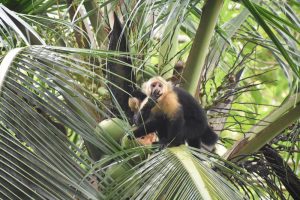
Our research is located in the Taboga Forest Reserve, in the northwestern part of Costa Rica, and at the UTN Experimental Farm. It is part of the Arenal-Tempisque Conservation Area. The reserve comprises 297 hectares of protected tropical dry forest, bordered by rice and sugarcane fields.
We monitor 4-5 habituated groups of white-faced capuchins: Tenori, Palmas (Palmas fissioned into Palmas A and Palmas B), Mesas, and Eskameca. We record data on their movement, behavior, physiology, cognition, communication, and feeding patterns.
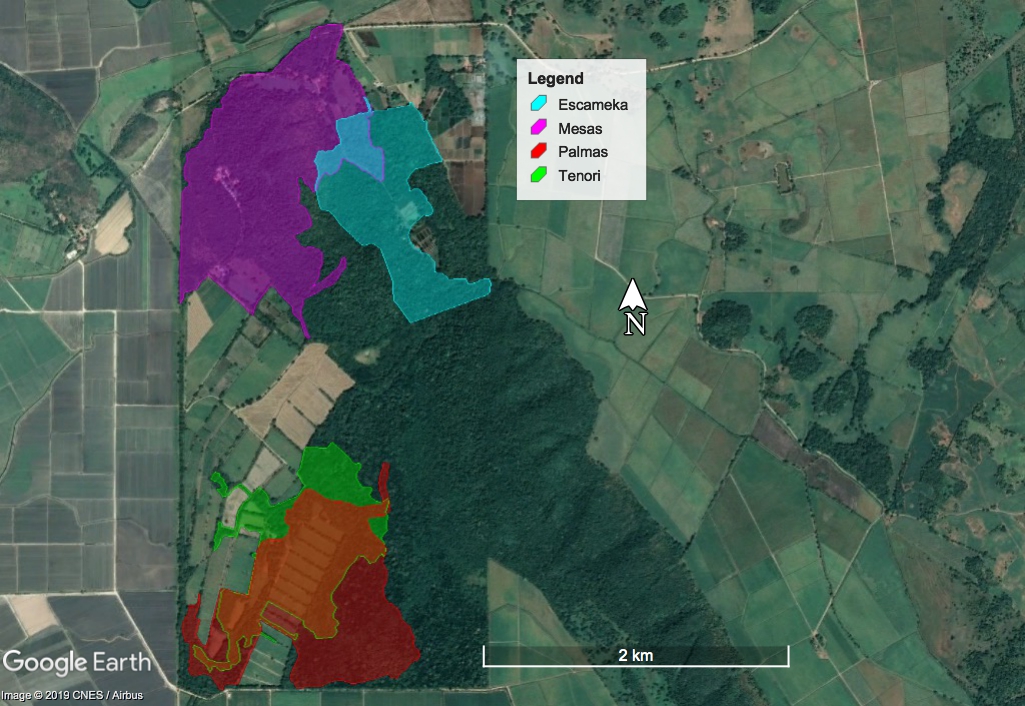
These are the home ranges that have been identified using GPS tracks. Mesas is shown in purple, Tenori in green, Palmas in red, and Eskameca in light blue. The image shows that the home ranges of the groups overlap considerably; this means that in these areas, intergroup encounters are frequent and generate competition for resources in these areas of overlap.
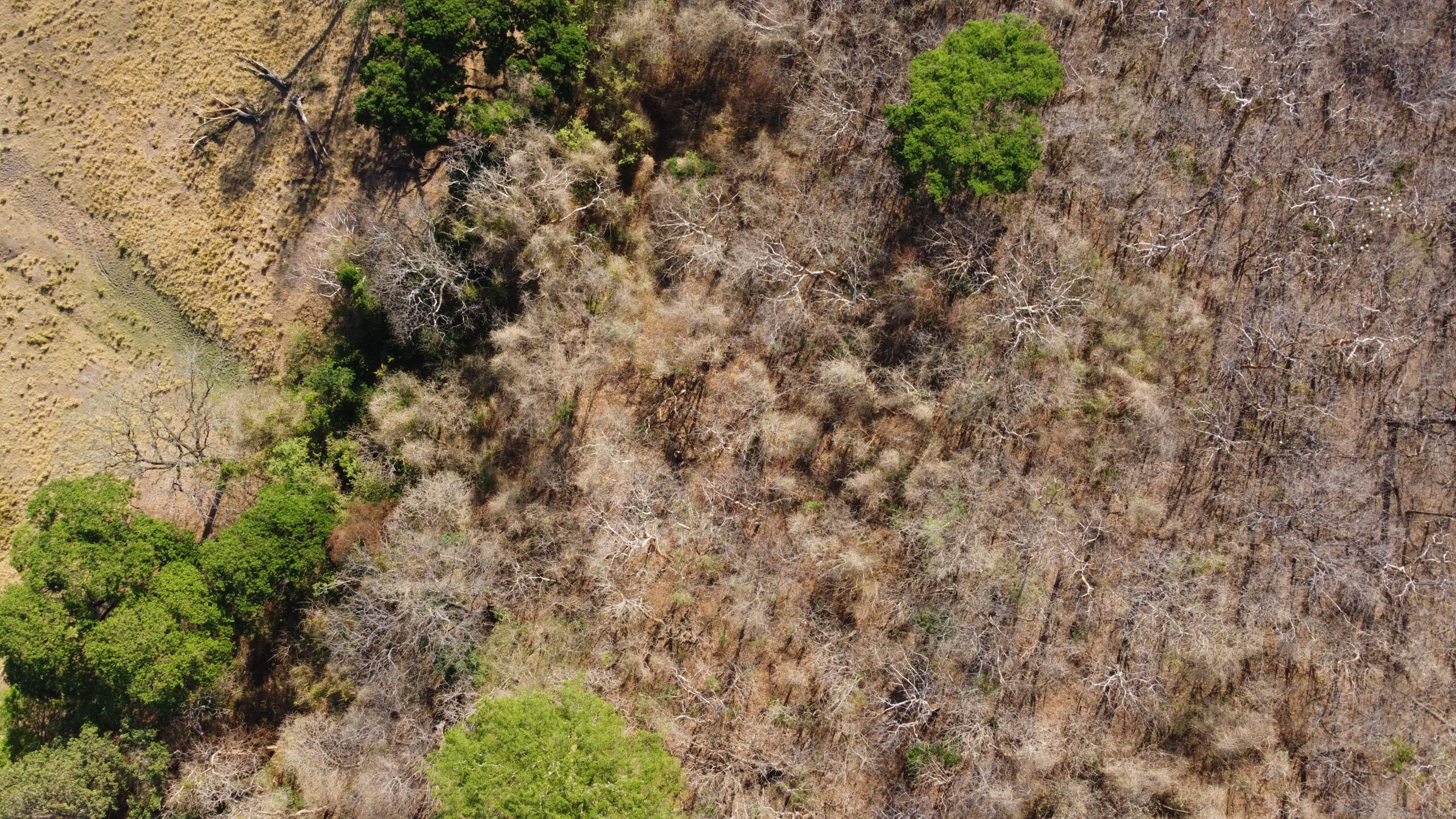
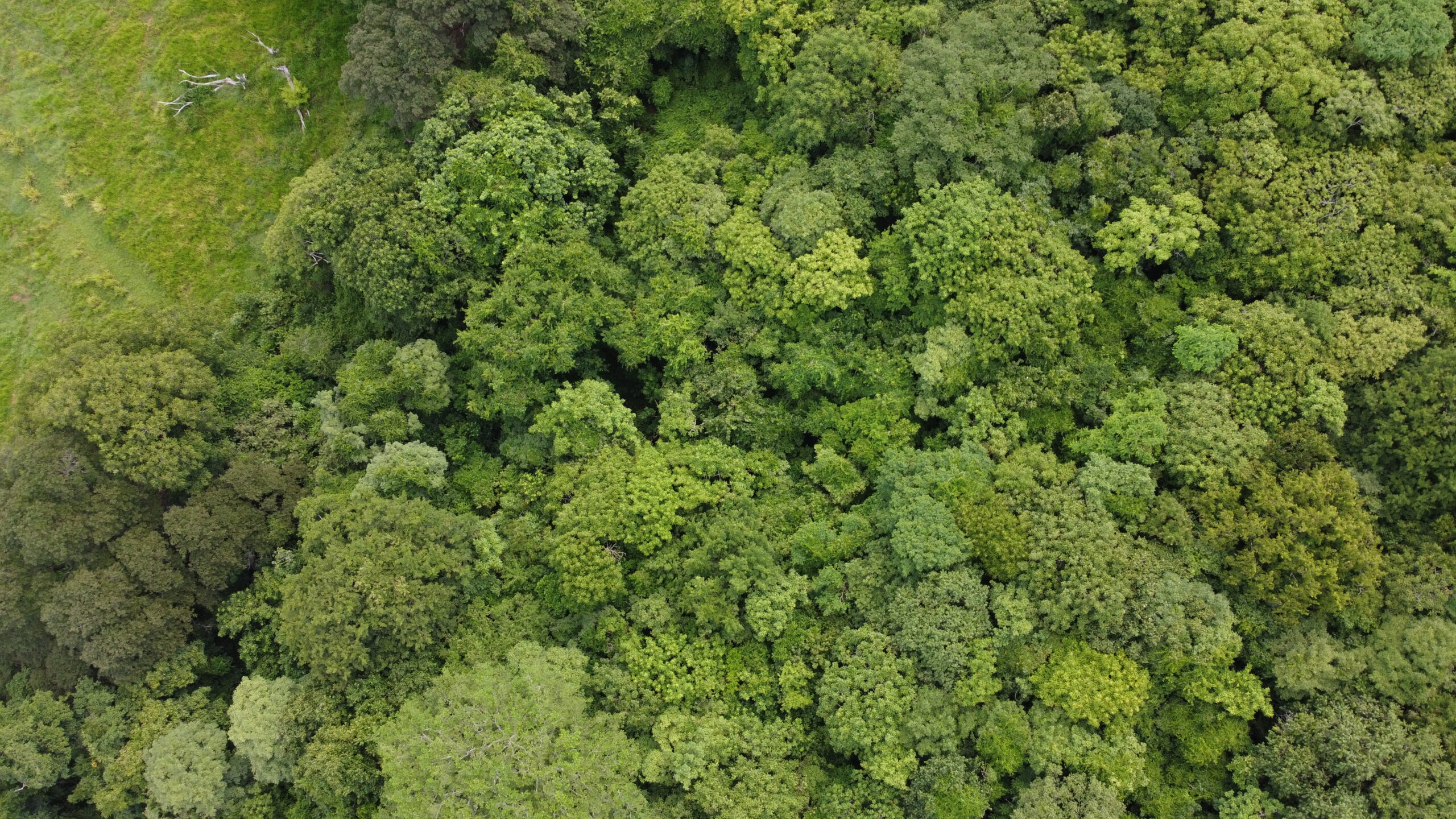
There is a river running through the reserve, but the animals additionally take advantage of numerous irrigation canals that run through the property. Some parts of the reserve remain consistently moist, but during the dry season, the higher elevations dry out and the trees in the deciduous dry forest lose their leaves. This means that the reserve—especially Eskameca Hill, located in the center of the reserve—changes substantially throughout the year. Between July 2017 and June 2018, the highest recorded temperature was 40 °C (104 °F), the lowest was 22 °C (71.68 °F), and the highest 24-hour rainfall total was 121 mm.
Cerro Eskameca during the dry season.
Cerro Eskameca during the wet season.
To date, we have marked over a thousand trees, which we monitor every 3 months to record the presence of leaves, fruit, and flowers. Currently, we use three methods for phenological monitoring: transects, plots, and drone photography.
We have created over 15 km of trails to facilitate access to different parts of the reserve, and we are in the process of creating more.
The housing used by the project team and the laboratory is generously provided by the National Technical University of Costa Rica. It is accessible from the nearby city of Cañas via a paved road and a long dirt road (approximately 18 km in total).
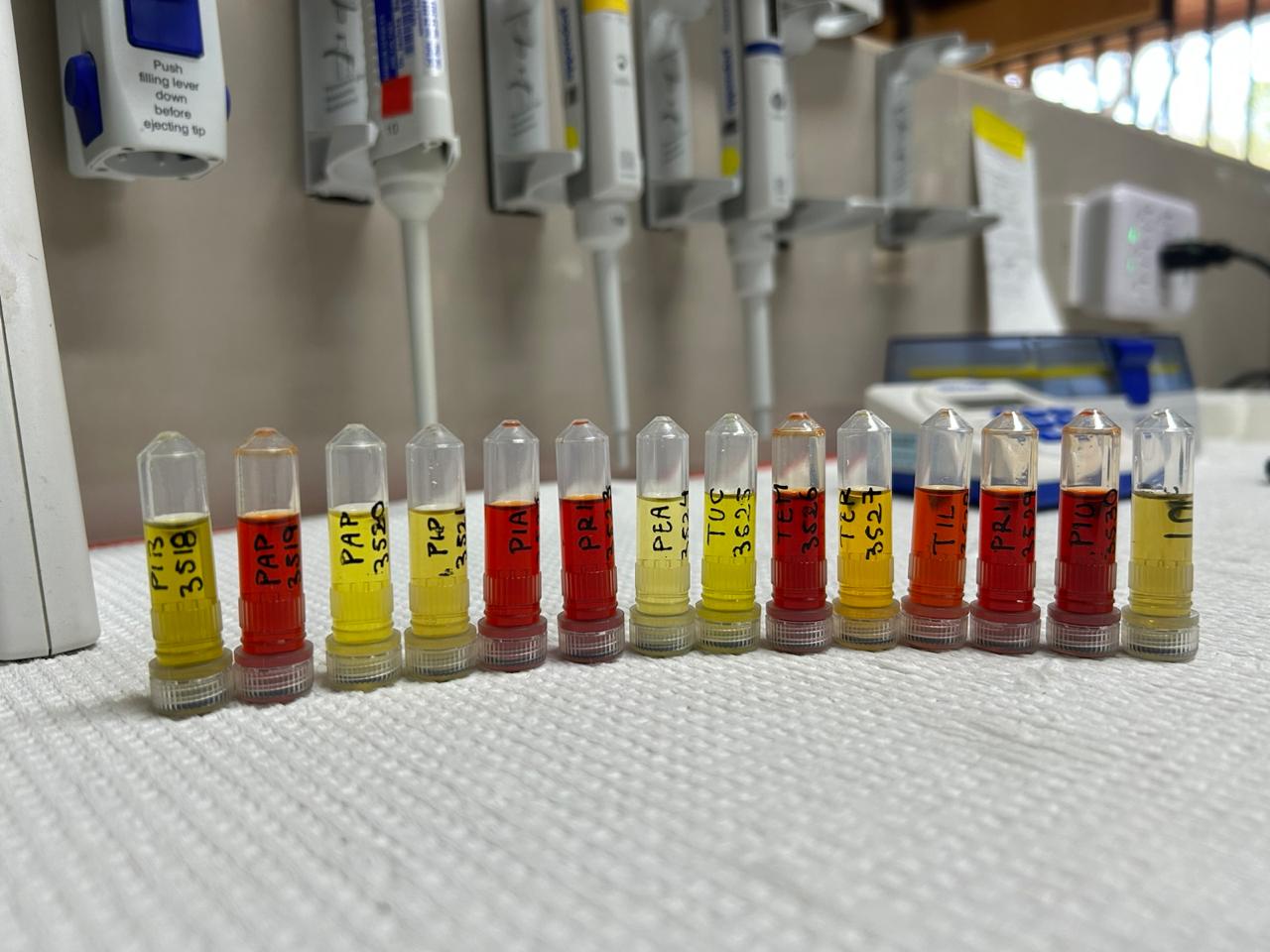
We are fortunate to be able to support an on-site endocrine laboratory (The Taboga Field Laboratory). Currently, we extract hormones from capuchin feces and analyze the samples for all steroid hormones (cortisol, testosterone, estradiol, and progesterone). We also collect capuchin urine for examining neopterin and oxytocin. We plan to expand the laboratory functions in the future to accommodate our research questions.